
The Role of Technology in Attracting Optometry Talent: OCT, AI, and Beyond
Introduction
In 2026, technology has become one of the strongest levers in optical recruiting. For years, compensation was the headline factor in recruiting optometrists and ophthalmologists. Today, clinicians want more: they want to work in practices where they can deliver high-quality care using modern tools. From Optical Coherence Tomography (OCT) to artificial intelligence (AI) diagnostic platforms, teleoptometry, and integrated electronic health records (EHRs), access to technology now ranks alongside salary and culture as a top driver of employment decisions. For employers, investing in technology is not just about patient care — it is a direct investment in recruiting and retention. For vision recruiters, conversations about technology have become essential in positioning an employer’s value proposition.
The Technology Shift in Recruiting
Historically, clinicians accepted roles with little attention to the available tools. That has changed dramatically. In a Review of Optometry survey, 78% of optometrists said the technology available at a practice directly influenced their employment decisions. Younger clinicians, especially Gen Z optometrists and ophthalmology fellows, want to practice at the top of their license. They expect employers to provide equipment like OCT, digital fundus imaging, corneal topography, and advanced slit-lamp systems. Without these tools, they risk feeling professionally limited — and recruiters find it harder to position such employers competitively.
Optical Coherence Tomography (OCT): The New Baseline
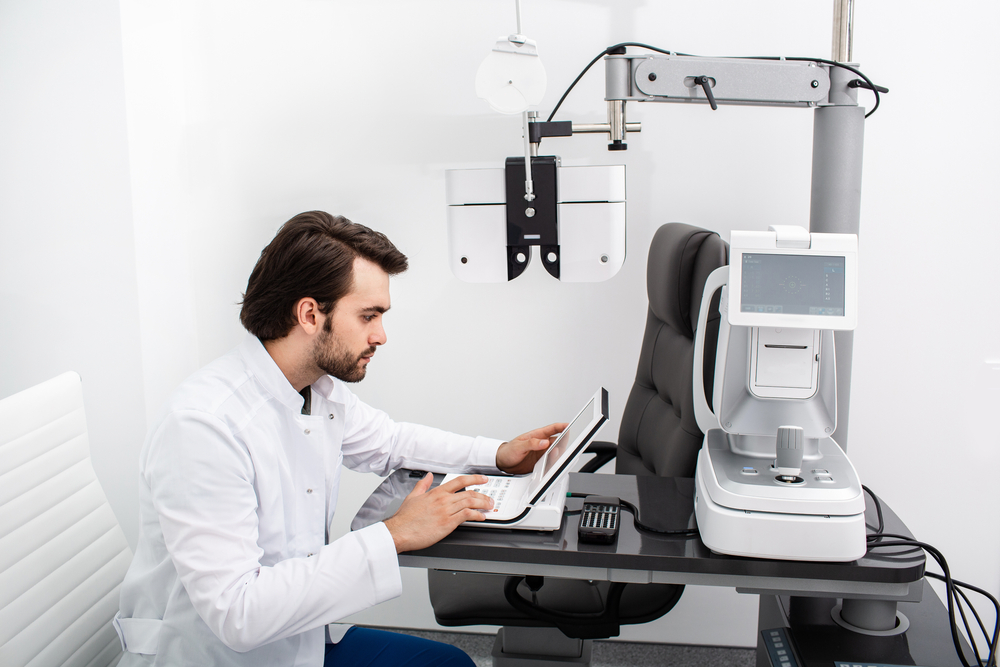
OCT has become the new standard of care in optometry and ophthalmology. It enables high-resolution imaging of retinal and optic nerve structures, essential for diagnosing glaucoma, macular degeneration, and diabetic retinopathy. Candidates increasingly ask recruiters whether employers provide OCT. For practices without it, recruiting becomes significantly harder. According to the American Academy of Ophthalmology, practices using OCT report improved diagnostic accuracy and patient trust, which in turn improves clinician satisfaction. Employers who lack OCT are often forced to offset the gap with higher salaries or bonuses.
Artificial Intelligence in Vision Care
AI is no longer theoretical. In 2025, the FDA approved several AI-driven platforms for retinal disease screening. AI algorithms can now detect diabetic retinopathy, glaucoma risk, and other conditions with increasing accuracy. Early-adopting practices not only improve patient outcomes but also brand themselves as innovators. From a recruiting standpoint, AI integration signals forward-thinking culture. For optometry recruiters, highlighting AI investments in job postings and interviews creates excitement among candidates eager to work with cutting-edge tools. Clinicians worry about being left behind in their careers if they join practices that resist innovation.
Teleoptometry and Hybrid Care Models
Teleoptometry has become mainstream. The American Optometric Association reports that more than 40% of practices now use telehealth in some form, whether for triage, follow-ups, or chronic condition monitoring. Candidates increasingly ask about hybrid schedules that blend in-office and telehealth care. For employers, offering teleoptometry is not only a way to expand access but also a recruiting differentiator. Hybrid models are particularly attractive to younger clinicians who value flexibility. Vision recruiters report that candidates are more likely to consider offers that include dedicated telehealth blocks, especially if they have family or lifestyle priorities that make traditional schedules more challenging.
EHRs, Workflow Automation, and Staff Support
Technology in recruiting is not limited to diagnostic tools. Candidates also evaluate practices based on workflow efficiency. Clunky EHR systems, heavy administrative burdens, and poor staff-to-clinician ratios contribute directly to burnout. In contrast, practices that invest in user-friendly EHRs, scribes, and automated scheduling attract more candidates. A 2024 Medscape report found that 54% of optometrists cited inefficient EHR systems as a source of dissatisfaction. Employers who advertise streamlined workflows and adequate staff support gain an edge in recruiting and retention.
Technology as a Retention Tool
Retention is just as important as initial recruiting. Clinicians are more likely to stay in practices where they feel they can provide high-quality care without frustration. Investing in OCT, AI, and streamlined workflows not only helps attract candidates but also prevents turnover. Optical recruiting firms regularly highlight that turnover costs — estimated at $50,000 to $75,000 per OD by Ophthalmology Management — far outweigh the cost of upgrading technology. For employers, framing technology investment as both a patient care improvement and a retention tool is a powerful business case.
How Recruiters Leverage Technology in Messaging
Vision recruiters now make technology a core part of candidate outreach. Job postings increasingly include details about diagnostic equipment, telehealth platforms, and AI integration. Recruiters use phrases like “tech-forward practice” or “AI-driven diagnostics” to spark candidate interest. Employers who downplay or omit technology in postings often receive fewer applicants. At Hëda Global, technology is a standard talking point when presenting opportunities, because candidates want assurance they will be practicing in modern, future-ready environments.
Employer Action Steps for 2026
To remain competitive, employers should:
Conduct a technology audit and upgrade where gaps exist.
Highlight equipment and systems in recruiting materials.
Emphasize workflow efficiency alongside diagnostic tools.
Offer hybrid teleoptometry schedules where feasible.
Partner with recruiters to market technology as part of the practice culture.
Candidate Considerations
For candidates, evaluating technology is an essential part of career decisions. Asking about diagnostic equipment, teleoptometry workflows, and EHR systems during interviews helps ensure alignment. Candidates who can demonstrate comfort with AI, OCT, and telehealth platforms also make themselves more marketable. Optometry recruiters advise candidates to highlight technology experience on résumés and in interviews, as employers increasingly view it as a core competency.
Conclusion
Technology is no longer just an operational choice; it is a strategic recruiting tool. Employers who invest in OCT, AI, and teleoptometry stand out in a crowded hiring market. Candidates who embrace these tools secure stronger career opportunities. For vision recruiters, technology has become a centerpiece of the conversation. In 2026, the most successful recruiting strategies will be built not only on compensation and culture but also on a clear commitment to innovation.
References
Review of Optometry — Technology Survey
FDA — AI Approvals
American Optometric Association — Telehealth
Medscape Physician Lifestyle Report
Ophthalmology Management — Workforce Costs

All Eye
Care Services

Keep
In Touch

Connecting exceptional professionals with organizations that value expertise, culture, and long-term success.
© 2026 Hëda. All rights Reserved. Accessibility Statement - Privacy Policy - Sitemap
Powered by:
